Blog Post

Why the actual relevance is often significantly smaller than perceived
Many companies assume that their custom code landscape is extremely complex.
I regularly hear sentences like “Our system is completely customized”.
But the data almost always tells a nuanced story.
1️⃣ A large part of the custom developments is no longer used
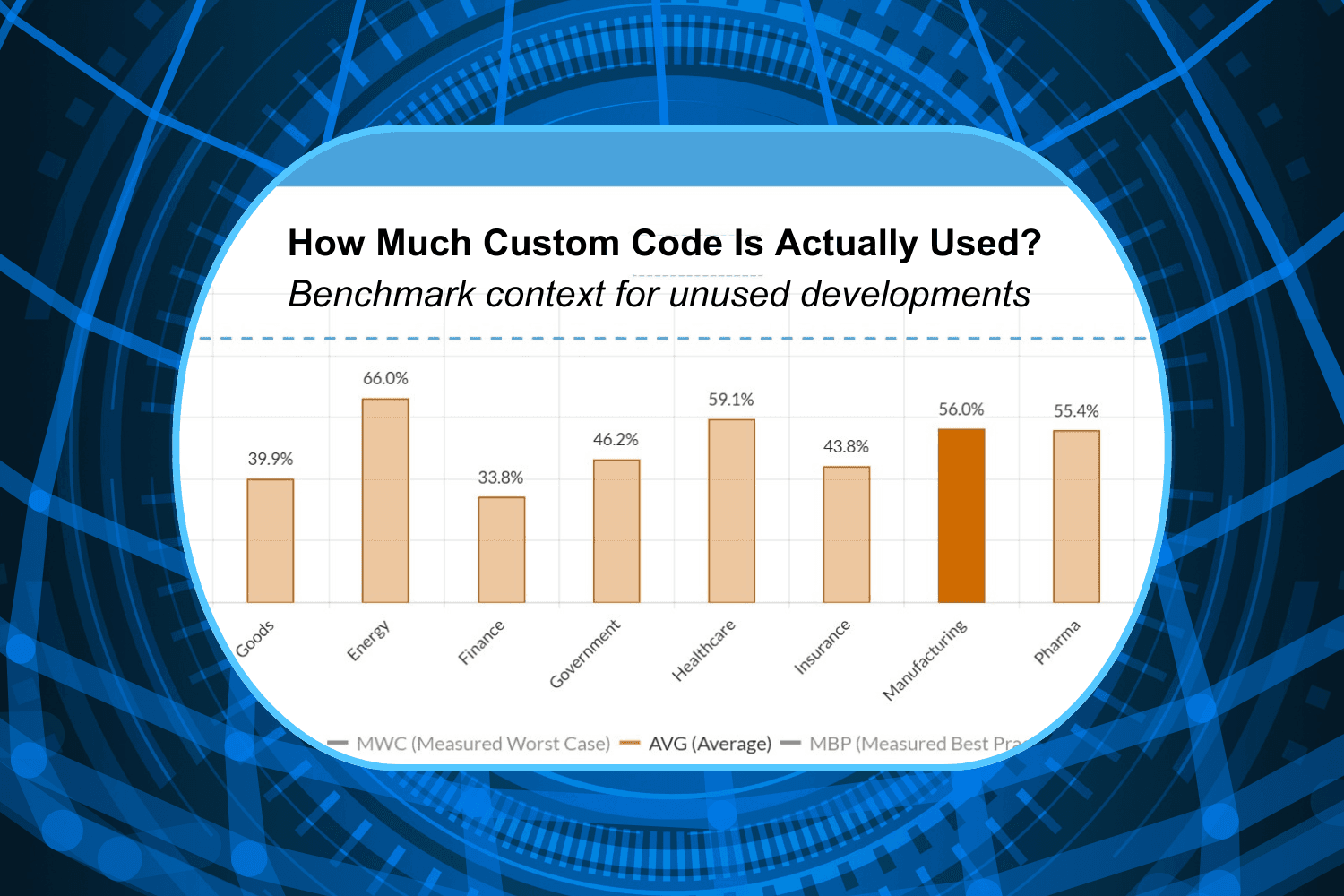
Industry benchmarks – for example, in the manufacturing industry – show:
About 56% of all custom developments are no longer used.
In the shown customer example, the value is even 85.3%.
Higher than the benchmark, but with the same pattern:
A lot has been built – little is still needed.
2️⃣ The proportion of heavily used custom codes is surprisingly small
The average value is around 15% in many industries.
In the analyzed customer system, it is only 3.7%.
What does this mean for transformation projects?
Yes – many systems contain a large amount of custom developments.
But: The relevant complexity, meaning the part that still delivers real business value today,
is usually significantly smaller than expected.
This leads to:
• clearer risk assessments
• more realistic project shaping
• fewer technical legacy issues in the core
• and often to a faster, safer project start 🚀
Especially now, as many programs are heading towards 2027 or 2030 milestones, this form of transparency is extremely helpful for clean planning towards 2026.